
I use MAMP to create a local development site and when I am ready to place it online I install the plugin Duplicator to back it up and through ftp move it online.
The video tutorial shows how to do these things:
– Download of MAMP 3.
– Renaming the existing MAMP 2 folder to MAMP-old, so that it will not be overwritten by the new installation.
– Installation of MAMP 3.
– Copying MAMP 2 – db and htdocs folder with contents over to MAMP 3 folder.
- Nov 13, 2020 MAMP stands for Macintosh, Apache, MySQL, and PHP. Apache is an open-source web server, MySQL is an open-source relational database management system, and PHP is a server-side coding language that WordPress is built on. As such, using MAMP can be useful for numerous WordPress users, as you will soon find out.
- WordPress Development and Deployment With MAMP, Git and Dropbox Nowadays in order to be a freelance WordPress developer you often need to develop simultaneously several WordPress sites for different clients.
- In this post, we will learn how to run WordPress locally on your Mac using MAMP. MAMP stands for Mac, Apache, MySQL, and PHP. It provides the full stack you need to quickly get your development site running locally so you can start working on your WordPress site. To get started, download MAMP from the website. Then run the installer.
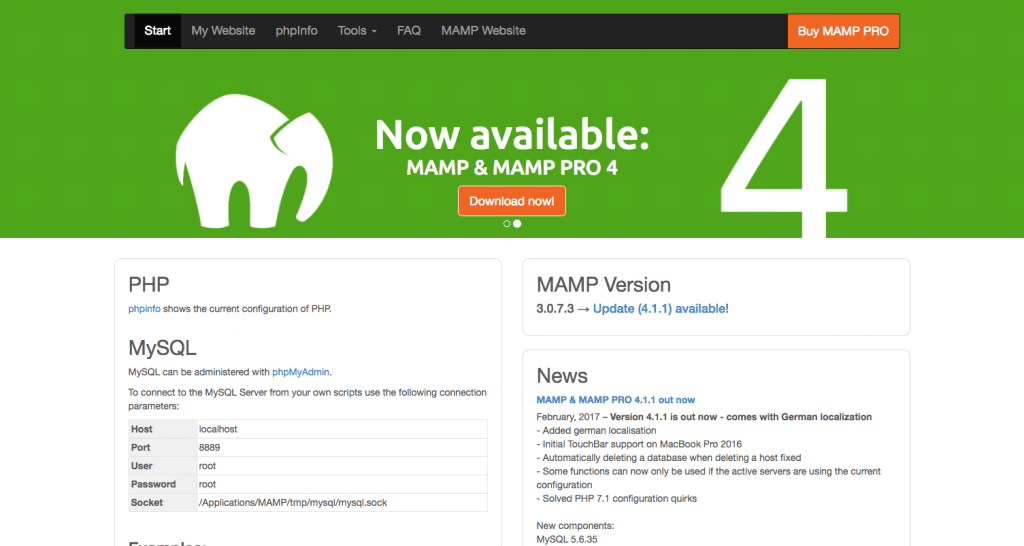
Start MAMP and click on the Start Servers button. In the status display in the upper right corner, the launch status of the servers is displayed. The web server (Apache) starts by default on port 8888, the database server (MySQL) on port 8889. Download and Install MAMP. Once the download has completed, double-click on the file to start the.

– Download of WordPress selfhosted software. Moving the unzipped folder to htdocs (document root folder) and renaming it.
– Going to the url https://localhost:8888/ which shows the htdocs root content. Selecting the new renamed WordPress folder.
– Opening a new MAMP start screen. Tools -> PHPMyAdmin to create a new database for the new installation of WordPress.
– Beginning the install of a new WordPress site. Inserting Database name – name of the database you just created, User name “root”, Password “root” and Host “localhost”.
– Finished.
If you plan on creating a WordPress Multisite through MAMP

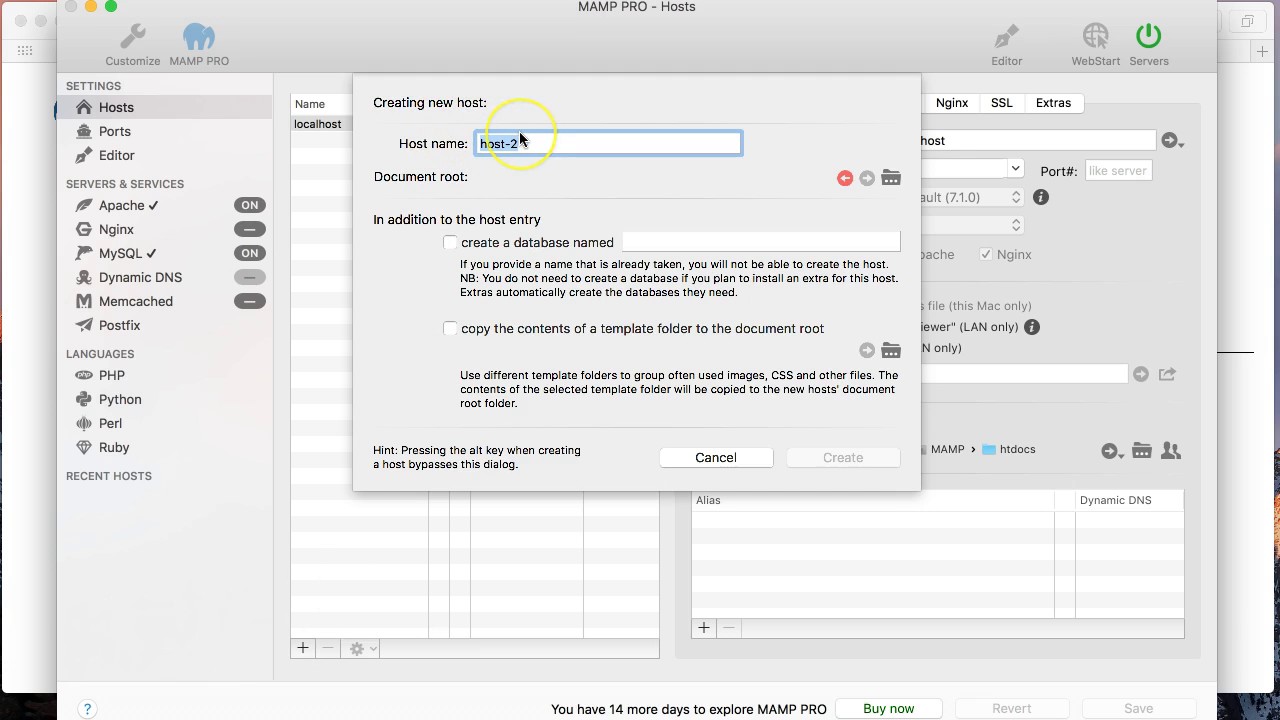
Then you need to change the Ports numbers. As you need the URL to look like this: https://localhost/MAMP/?language=English without the :8888 Apache port number.

Stop the Servers. Open Preferences in the MAMP panel. Go to Ports.
Click the “Set Web & MySQL ports to 80 & 3306”. Click OK.
Mamp Wordpress Tutorial Free
A warning message might come up:
“…. Each server must be assigned a unique port. Please check your configuration.”
Go back and change the Nginix port. I use the following:
Apache Port: 80
Nginx Port: 8888
MySQL Port: 3306
Click ok. Restart the Servers.
The root document folder url will change from localhost:8888/ to localhost without any port numbers in the URL.
Go ahead and create your WordPress site and then multisite.
NB!
If you created sites with the default port numbers (8888 and 8889) these sites will not come up because of the change. To see these sites change the port numbers back to the default. By Stopping MAMP and restarting and going to Preferences then Ports and clicking Set MAMP ports to default.
Mamp Wordpress Local
MAMP 3 user guide:
https://www.mamp.info/en/documentation/MAMP-3-User-Guide.pdf
Mamp Pro Wordpress Tutorial
Another article to check out:
https://www.grafxflow.co.uk/blog/website-server/setup-localhost-subdomain-using-mamp/