

Retrograde Orbit Inclination
Jul 12, 2020 ('Ascending' is from the point of view of a prograde (eastward) orbit. If you're orbiting retrograde, your orbital plane 'descends' below the other one at the 'ascending' node.) Set up a maneuver node at the next one of these nodes. The maneuver you want is pure normal, in the opposite direction from the type of node it is. Feb 06, 2017 A retrograde orbit for an orbiting moon most likely means that moon was captured after the planet formed. Triton might have come out of the Kuiper Belt, the region of icy debris beyond Neptune. See full list on space.fandom.com. Retrograde Orbit is a sci-fi story that expresses what it’s like to be the grandchild of refugees. It’s also a book about strong maternal (and grand-maternal) connections. It's an illusion, caused by the ways that Earth and Mars orbit the sun. Mars Retrograde Happens Every Two Years The two planets are like race cars on an oval track. Earth has the inside lane and moves faster than Mars - so much faster, in fact, that it makes two laps around the course in about as much time as it takes Mars to go around once.
StarChild Question of the Month for June 2002
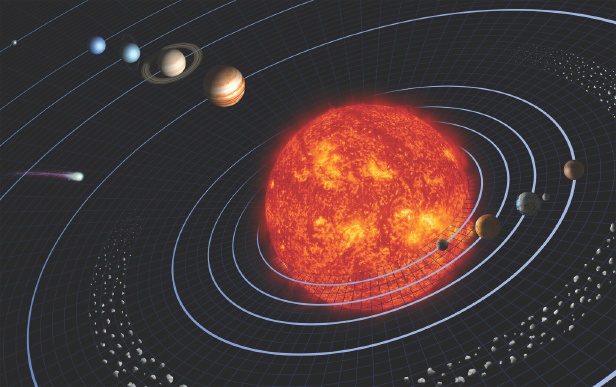
Question:
What does it mean for Mercury to be in retrograde?
Distant Retrograde Orbit
Answer:
Retrograde motion is an APPARENT change in the movement of the planet through the sky. It is not REAL in that the planet does not physically start moving backwards in its orbit. It just appears to do so because of the relative positions of the planet and Earth and how they are moving around the Sun.
Retrograde Orbit Comic
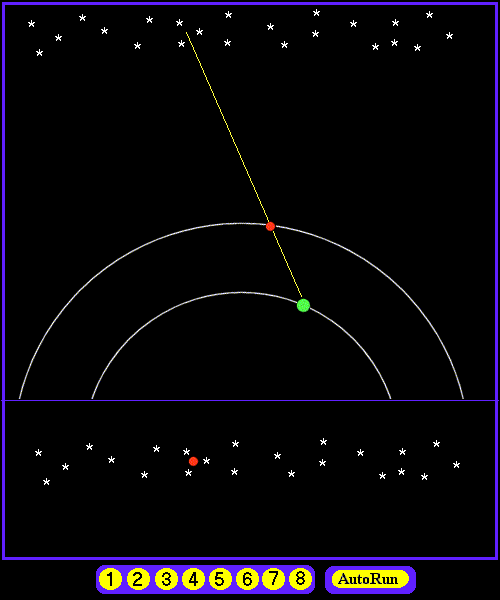
Normally, the planets move west-to-east through the stars at night. This is referred to as prograde motion. However, peridiocally the motion changes and they move east-to-west through the stars. We call this retrograde motion. The retrograde motion continues for a short time and then the motion switches back to prograde. This seemingly strange behavior is easily understood within the context of a Sun-centered (heliocentric) solar system. The explanation for retrograde motion in a heliocentric model is that retrograde occurs roughly when a faster moving planet catches up to and passes a slower moving planet.
How the planet Mars would appear to have both prograde then retrograde then prograde motion is shown in the diagram below. Notice that it is all due to the fact that the Earth moves faster in its orbit than does Mars. So as we catch up to that planet in its orbit and then move beyond it, the motion appears to go through the pro-retro-pro cycle.
You can experience this effect for yourself. Start out standing side by side with a friend. Have a friend walk forward slowly. Now you walk forward at a faster speed. Watch your friend and think about how they are moving relative to you. At first, they move away, then as you pass them, they APPEAR to be moving backward relative to you - even though they are still walking forward.
The StarChild site is a service of theHigh Energy Astrophysics Science ArchiveResearch Center (HEASARC),Dr. Alan Smale (Director), within theAstrophysics Science Division (ASD) atNASA/GSFC.
StarChild Authors: The StarChild Team
StarChild Graphics & Music: Acknowledgments
StarChild Project Leader: Dr. Laura A.Whitlock
Curator:
Responsible NASA Official:
retrograde orbit
[′re·trə‚grād ′ȯr·bət] (astronomy)Want to thank TFD for its existence? Tell a friend about us, add a link to this page, or visit the webmaster's page for free fun content.
Link to this page: