
Can BitWarden context menu entries in browser be moved to top of the list. 0: 26: April 19, 2021 Graceful license expiration. Project:self-host, app:all. 11: 763: April 19, 2021 Full search function on Mobile apps. 1: 36: April 19, 2021 Web feature: create custom field in Bitwarden.
Introduction
This article will cover setting up your own self-hosted Bitwarden instance with Docker and configuring ngnix to allow for public exposure for cross-device access to your vault.
PSA: self-hosting Bitwarden is NOT a security feature Please stop advertising the ability to self-host BW as a security feature - it's very misleading. The fact that BW is open-source allowing the ability to self-host is a very awesome and unique feature. Bitwarden is the easiest and safest way to store all of your logins and passwords while conveniently keeping them synced between all of your devices. Password theft is a serious problem. The websites and apps that you use are under attack every day. Bitwarden is the easiest and safest way to store all of your logins and passwords while conveniently keeping them synced between all of your devices. Password theft is a serious problem. The websites and apps that you use are under attack every day.
What is Bitwarden?
Bitwarden is a free and open-source password management service that stores sensitive information such as website credentials in an encrypted vault. The Bitwarden platform offers a variety of client applications including a web interface, desktop applications, browser extensions, mobile apps, and a CLI.
I use Bitwarden as my main password vault. It stores my card details for automating the filling out of payment forms. Saves me from having to find or remember my card details. I also use Bitwarden for storing all of my passwords.
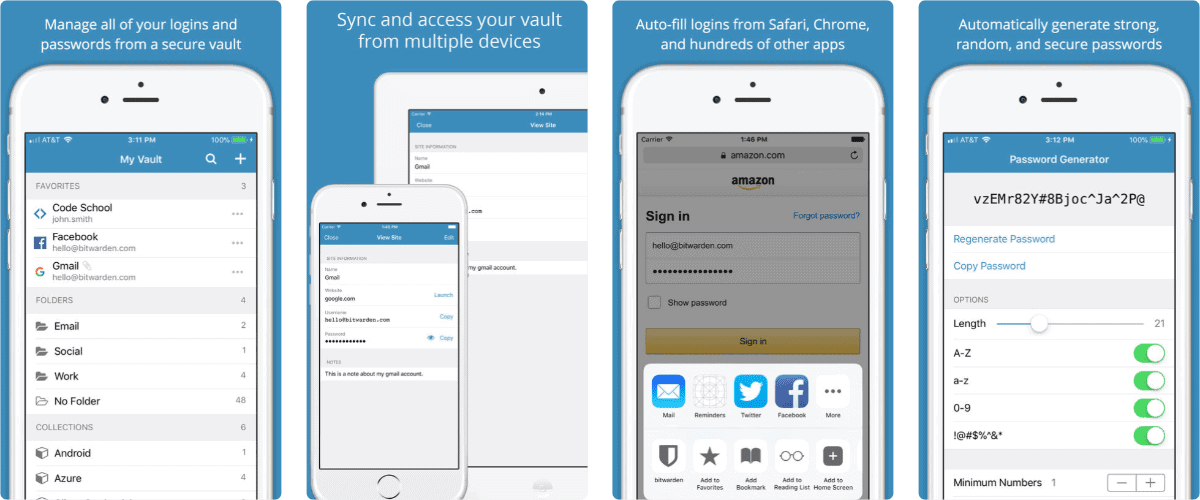
Having Bitwarden as a public endpoint means that I can connect to my password vault using the Bitwarden app on Android, specifying my self hosted instance.
Setting up the Bitwarden Server
This section of the tutorial is to set up the main Bitwarden 'hub'. This will be a publicly exposed Bitwarden API that will live on your server.
Require some assistance?
Our experts can help get you set up!Step 1: Setting up your Linux server
You'll need to either have an existing server instance or create one. I use a Proxmox instance running on a server in my loft. You could also use something like Digital Ocean to host your Bitwarden Server. Using the following link will give you $100 worth of credits for 60 days to play around with, just sign up using this link.
You could also use a cheap Raspberry PI to set up your own Linux server.
Once you have the server set up, or have logged in. You'll need to do some updates and run some prerequisite installs.
Next, we need to install Docker. Docker is the layer which your containers run.
To install Docker on your instance, you need to run the following command.
The following script is a convenience script provided by the Docker team. It's highly recommended to always check what you're going to execute, before executing it.
Once you have executed the Docker install script. You should see an output like the following.
As you can see in the output, the command was executed successfully. You may also notice that there is a console message specifying how to use Docker as a non-root user.
This means that whenever you are executing the Docker command, you'll no longer need to type in your sudo password.
If this sounds good to you, you can simply run the provided command, substituting your-user for your server user. In my case, my user is ubuntu. My command would look like this.
We also need to install Docker Compose. This can be done by running the following commands.
Step 2: Provisioning your Bitwarden Server
Next, you'll need to create a new folder, this will house your Bitwarden Server, you can call it anything memorable. I'll just call mine bitwarden
Next, you'll need to create a docker-compose.yml file. This is an orchistration file which docker-compose will use to provision your Docker instance.
Next, you'll need to edit your `docker-compose.yml` file and paste in the following content.
I'm using bitwarden_rs as it's written in Rust, faster and more reliable. Also entirely opensource with a heavy user-base.
Save your docker-compose.yml file and exit back to your bitwarden directory.
Step 3: Running your Bitwarden Server locally
Now, you have everything provisioned for running your Bitwarden Server.
The next thing to do is run it.
This will start up your Bitwarden Server inside Docker, it may take some time to pull down the images.
You can eventually see your instance running by executing the following
This will list your running instance.
If all is well, you can locally view your Bitwarden Server by navigating to http://localhost:PORT. Or from another machine by using your ip address instead of localhost
You should see something that looks like the following.
Finally, you'll just need to register for an account on your new hosted instance.
Click the Create Account button
Then fill out your details. If you have an existing Bitwarden account, you'll still have to create a new account on this instance. You can then Export and Import between accounts.
The last thing to do is hit Submit
If your instance isn't on your local machine, you will need to set up Nginx routing, which you can follow in Step 4.
Step 4: Exposing your new server publicly
This part may sound scary, but it is required to allow your Bitwarden Clients (Android, iOS, Chrome extension etc) to connect to your server.
We're going to be using nginx.
Setting up nginx
Nginx is a reverse proxy that allows you to point incoming web traffic to your new Bitwardeb server.
Firstly, install nginx if you haven't already
If you have UFW installed, you will have to Allow Nginx through your local firewall.
I have a tutorial for setting up UFW here
As you can see, there are three profiles available for Nginx:
- Nginx Full: This profile opens both port 80 (normal, unencrypted web traffic) and port 443 (TLS/SSL encrypted traffic)
- Nginx HTTP: This profile opens only port 80 (normal, unencrypted web traffic)
- Nginx HTTPS: This profile opens only port 443 (TLS/SSL encrypted traffic)
You can enable this by typing:
Next thing to do is just double check your nginx server is up and running
You should see something that looks like the following
The next part allows us to take incoming traffic and point it to your container instance. Allowing you to expose your Bitwarden server to the internet.
Navigate to /etc/nginx/
Use your favorite text editor and open the following file with sudo
I use the following code for my syncing server
Port-forwarding
You will need to port forward your instance to allow public access to your instance. This will involve googling how to port forward from your router.
You'll need to point port 80 and 443 to your instance where Nginx is set up.
Linking Bitwarden Server with your public domain
You will also need to set up a public domain name. This can then be used to call your new public instance with port 443 exposed.
For example, I would set up a subdomain on bowlerdesign.tech to be vault.bowlerdesign.tech. Notice this is also the domain I specified in my Nginx config above.
Here's something to search for with regards to setting up a domain name
Setting up Certbot
Certbot allows us to generate SSL certificates for free with Let's Encrypt. It's simple to install and use. Even hooks in with Nginx, meaning that there's no more manual configuration required.
To install Certbot, simply run the following command
Then, to set up your SSL certificate, run

Follow the instructions, select your domain name from the nginx list.
Also, select redirect as this will upgrade any http requests to https.
Bitwarden Reviews 2021
Step 5: Connecting to your new Bitwarden instance from a client.
I'm going to use the Firefox Bitwarden Plugin for this part of the tutorial. But the process is identical for all Bitwarden clients.
First, if you haven't already, install your chosen Bitwarden client and open it.
In the top left corner, click the cog icon
You'll then get some configuration. Simply add your full url into the Server URL field
Like so, then just hit Save and log in as normal
That's it
Pretty easy right?
Please don't hesitate to get in touch in the comments if you get stuck. I'd be more than happy to help out with any issues you may face.
This post contains affiliate links meaning we may receive a small commission on purchases made through links in this post. At no extra cost to you 😊Enjoying the post?
Subscribe to our free Weekly Newsletter, featuring our latest posts.Straight to your inbox.No spam ever (we hate it as much as you do).I’ve used a number of different password managers over the years. I was a LastPass user for a long time, but recently felt compelled to take a look at other options in this space. After a number of evaluations, I’ve settled on a new option: Bitwarden.
My two favorite parts about BitWarden: There is a self-host option, and the project is open source. There are a number of different open source implementations of various aspects of the project, which is awesome.
I decided to deploy my self-hosted Bitwarden deployment in AWS. My first decision to make was “how should I host this?”. Bitwarden is packaged as a docker container by default, so we have a few choices to run the image:
- ECS EC2
- ECS Fargate
- Self managed docker in EC2
Bitwarden Internet Explorer
Initially, I built out the environment in Fargate. That worked great. I more or less followed this build, which gets you started, but isn’t quite complete. For example, you need to make some decisions around persistent storage, etc. After running in Fargate, I decided the cost was too high for a single person to use as a password manager. For example, having a load balancer in front of a single container is not cost effective for one user. If I was hosting for an organization, I would probably go with this build.
For a lower cost solution, I settled on this in the end:
- A single AWS EC2 T3.Small instance running Ubuntu. I installed Docker, Docker-Compose, and Bitwarden here.
- AWS Route 53 DNS
- LetsEncrypt SSL managed by Bitwarden scripts via Certbot.
- AWS SES for sending mail
So how do you do this for yourself? Its pretty straight forward:
Bitwarden Breach
- Provision an EC2 instance running the OS of your choice. Bitwarden has options for Windows or Linux. There are many guides on how to do this. Here is a good one.
- Minimum hardware requirements are single core, 2GB of RAM, and 10GB of drive space.
- For the security group, allow ports 443 and 80 for Bitwarden, and 22 for your own access via SSH.
- Provision an elastic IP to your new instance.
- Update your domain in Route 53 to point at your new elastic IP. We want this all setup before you install Bitwarden, because the install script will verify your domain via LetsEncrypt during the install process. The whole install will fail if your domain isn’t setup yet.
- Install Docker. Again, many guides on this. Here is a good one.
- Install Docker-Compose. Here is a good guide for that.
- Deploy Bitwarden via the nicely documented install guide located here. Pay attention to the section on editing environment variables. This is where you will configure your SMTP settings, which are required for account activation, admin access provisioning, and other features. I entered all of my AWS SES SMTP settings here, and am having Bitwarden send all its mail through that service.
- At this point, you have a functional server install. Bitwarden is running, but won’t automatically start on system boot, so you need to add it to system startup. There is a nice tutorial to do so on this page.
- Create a client account in your new self hosted environment by clicking create account on the login page at https://YourBitwardenURL.com, as shown below.
- Check out the admin area. Its at https://yourbitwardenurl.com/admin.
- Install your apps and addons. There are nice apps for IOS and Android, as well as browser plugins for all the major options.
- Configure your apps to connect to your instance. In the IOS/Android apps, there is a gear in the upper left hand corner. Click that gear, and enter the URL for your private instance, then login.
- Now that everything is up and running, I suggest configuring AWS Backup to take periodic snapshots of your instance. Its quick, easy, and inexpensive.
Bitwarden Chrome
What is your favorite password manager these days? Any questions about this process? Let me know below.