
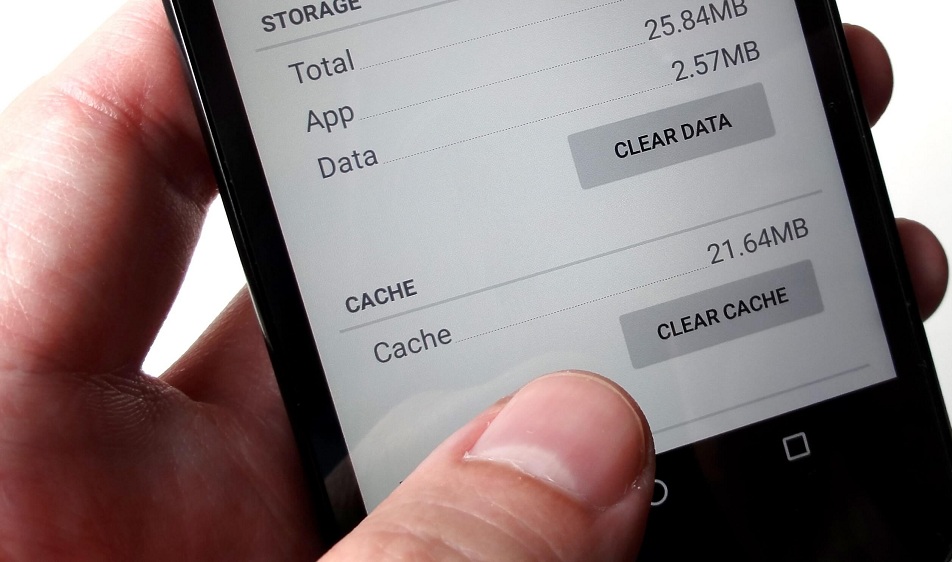
- Open the Settings menu. Select Apps & Notifications. Select Manage All Applications or See all. Apps and choose the app you are having trouble with. Select Storage, tap to Clear Data or Clear Storage, then Clear Cache.
- You can clear the cache in Internet Explorer to improve its performance if you are having loading issues with the browser. You can find the cache controls in the 'Internet options' dialog box under.
- If you have to clear the disk cache, the first command is safest in enterprise and production as “.echo 1.” will clear the PageCache only. It is not recommended to use third option above “.echo 3 ” in production until you know what you are doing, as it will clear PageCache, dentries and inodes.
- How To Clear Computer Cache
- Clear The Cache Memory In Windows 7
- Clear The Cache Memory In Linux
- Clear Cache Memory Android
How to clear cache memory in windows 10Follow four Step and you can better performance in your PC. Please Subcribe Our Channel for More Tech Video.
By: Bhavesh Patel | Updated: 2017-03-31 | Comments (2) | Related: More >Performance Tuning
Free MSSQLTips Webinar: Identify SQL Server Performance Problems Quickly and Efficiently
Optimal SQL Server performance remains a high priority for DBAs and Developers. Unfortunately, it is very difficult to identify the root cause of the issue, optimize the queries, implement the needed changes and validate the improvement. Learn how SQL Grease goes indepth on your queries to give you the insight you need to have the application performance your users demand.
Problem
Sometimes there are issues due to what SQL Server has stored in its cache. Here are some possible reasons which may create cachingperformance issues.
- Ad-hoc Query workload issues due to cache bloat
- Excessive use of dynamic T-SQL code
- Server has insufficient memory or not properly assigned to SQL instances
- Memory pressure generated due to heavy long running transactions
- Server has frequent recompilation events
When issues such as these are found you may need to flush the plan cache or buffer cache.So in this tip we look at different ways to flush the SQL Server cache.
Solution
Iwill explain different commands that you can use to manage what is in the cache.
DBCC FREEPROCCACHE
This command allows you to clear the plan cache, a specific plan or a SQLServer resource pool.
Syntax
- plan handle uniquely identifies a query plan for a batch that has executed and whose plan resides in the plan cache.
- sql_handle is the SQL handle of the batch to be cleared. sql_handle is varbinary(64).
- pool_name is the name of a Resource Governor resource pool.
Examples
Flush the entire plan cache for a SQL Server instance.
Flush the plan cached for an entire instance, but suppress the output messages.
To flush a specific resource pool, we can use this command to see how muchmemory is being used for each resource pool.
Then with the output above, we can specify the specific resource pool to flushas follows.
We can also flush a single query plan. To do this we need to first get the plan_handle fromthe plan cache as follows:
Then we can use the plan_handle as follows to flush that one query plan.
DBCC FLUSHPROCINDB
This allows you to clear the plan cache for a specific database.
Syntax
Example
Flush the database plan cache for database MyDB.
DBCC FREESYSTEMCACHE
Releases all unused cache entries from all caches. You can use this commandto manually remove unused entries from all caches or from a specific ResourceGovernor pool.
Syntax
Examples

The following example uses the MARK_IN_USE_FOR_REMOVAL clause to release entries from all current caches once the entries become unused.
Flush the ad hoc and prepared plan cache for the entire server instance.
Clear all table variables and temp tables cached.

Clear for a specific user database.
Remove the tempdb cache.
DBCC FREESESSIONCACHE
Flushes the distributed query connection cache used by distributed queries against an instance of SQL Server.
Syntax
Example
DBCC FLUSHAUTHCACHE
DBCC FLUSHAUTHCACHE flushes the database authentication cache maintained information regarding login and firewall rules for the current user database. This commandcannot run in the master database, because the master database maintains the physical storage information regarding login and firewall rules.
Syntax
Using sp_recompile
For specific objects that are cached, we can pass a procedure name, trigger, table,view, function in the current database and it will be recompiled next time it isrun.
Syntax
Example

Using ALTER DATABASE
You can also clear the plan cache for the current database using ALTERDATABASE as shown below. This is new in SQL Server 2016.
Syntax
DBCC DROPCLEANBUFFERS
Use DBCC DROPCLEANBUFFERS to test queries with a cold buffer cache without shutting down and restarting the server.
Syntax
- WITH NO_INFOMSGS - Suppresses all informational messages. Informational messages are always suppressed on SQL Data Warehouse and Parallel Data Warehouse.
- COMPUTE - Purge the query plan cache from each Compute node.
- ALL - Purge the query plan cache from each Compute node and from the Control node. This is the default if you do not specify a value.
Next Steps
- Check out these other performance related tips Performance Tips.
- Reference Link used for more clarification aboutthese command.
- Please be careful while flushing the cache. This can impact overallperformance and it is best to first test with a development or QA environment beforerunning in production.
Last Updated: 2017-03-31
How To Clear Computer Cache

About the author
View all my tips
Clear The Cache Memory In Windows 7
In our company, we have a cloud server running CentOS 7 as our demo server. However, the server’s MariaDB is always shutdown whenever our cronjob tries to restart the MariaDB server. The reason is because the server is running out of memory when the MariaDB server is restarting.
After monitoring the server’s resources usage using top or htop command, we noticed that the memory usage is always high because of the buffer/cache memory is holding the memory.
Linux always tries to use RAM to speed up disk operations by using available memory for buffers (file system metadata) and cache (pages with actual contents of files or block devices). This helps the system to run faster because disk information is already in memory which saves I/O operations.
Reference
Clear The Cache Memory In Linux
The buffer/cache memory is actually useful for the server’s disk operations. However, it’s causing our website to fail. Therefore, we need to find a fix for it. After doing research online, we found a command which we can use to clear the buffer/cache memory.
/bin/sync && echo 3 > /proc/sys/vm/drop_caches
Clear Cache Memory Android
We then add the command above in our cronjob and run it before our cronjob to restart the MariaDB. After that, our server’s MariaDB never shutdowns by itself because of the insufficient memory anymore.
Hope the sharing would help others.